


All Posts
Aspire Launchpad
Entrepreneur Stories
Kenya
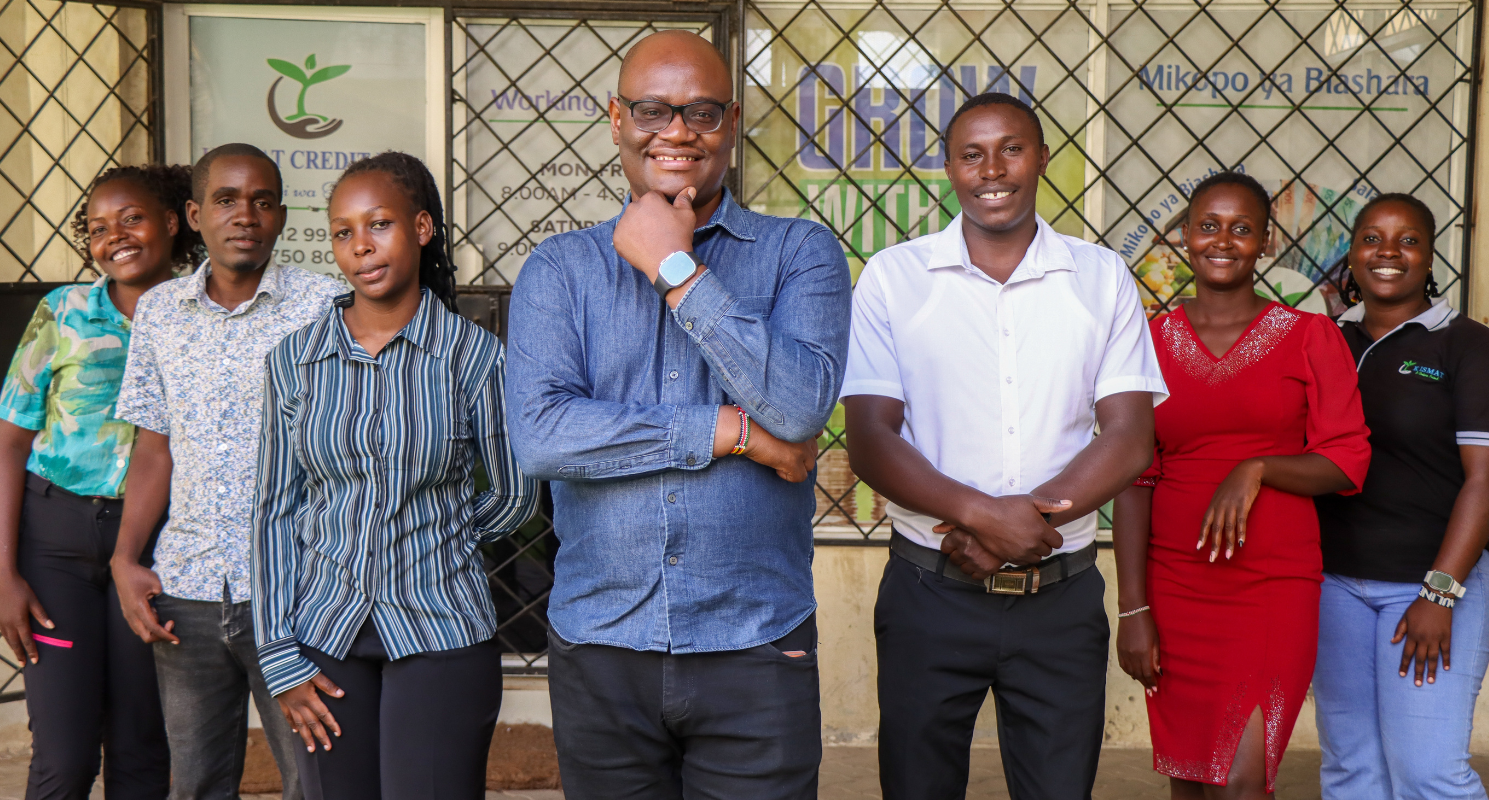
When traditional banks pulled back from micro-businesses during the COVID-19 pandemic, many small entrepreneurs were left facing an urgent question: where could they find the modest amounts
of capital they needed to support their businesses and livelihoods?
Nicholas Ouma witnessed the problem firsthand.
With eight years of experience in banking, including roles as a Credit Officer and Manager, Nicholas understood both the challenges facing small businesses and the limitations of traditional lending.
During the pandemic, he saw micro-entrepreneurs struggling to access financing as banks became increasingly cautious about lending to businesses perceived as high-risk.
Rather than simply observing the problem, Nicholas decided to build a solution.
That decision became Kismat.
Today, Kismat has grown from a one-employee operation into a business with 20 staff members and five commission-based workers. Its annual loan volume has grown from approximately Ksh 14–16
million to over KSh 100 million, while the number of loans has increased from around 1000 to 2000 per year.
Behind those numbers is a story of sacrifice, learning, mentorship, and a growing commitment to use business as a vehicle for community impact.
Kismat's beginnings were far from comfortable.
After deciding to pursue the business, Nicholas bootstrapped the operation, relying on personal savings and investments from friends to generate the initial cash flow. At one point, he moved into a bedsitter to reduce expenses and transferred his children from private to public school in order to commit more resources to getting the business off the ground.
But the vision was bigger than simply providing loans.
From the beginning, Kismat combined financial support with entrepreneurial training, financial literacy and encouragement. The goal was to understand the environments in which clients operated and provide resources that reflected their realities. As Nicholas observed, entrepreneurs in different areas face different economic conditions and risks, making context an important part of responsible lending.
On December 7, 2020, Nicholas obtained a license from the Central Bank of Kenya, and Kismat officially launched on January 1, 2021.
For a new business, capital is important — but Nicholas learned that trust is just as valuable.
He describes integrity and trust as the primary currencies available to a new founder. To build accountability into the young enterprise he and his first employee developed organizational policies and introduced quarterly performance reporting to investors.
The journey also exposed weaknesses in the company's early systems.
A commission-only model initially seemed practical, but Nicholas found that it did not create the level of commitment to the long-term success of the business that he needed. Kismat subsequently moved toward a performance management model that combined salaries with clear performance indicators. The change helped strengthen employee retention and engagement.
These were important lessons for a growing entrepreneur: sustainable growth requires more than
customers and capital. It requires systems, people and a culture that can support the business as it
expands.
Nicholas first encountered Sinapis at a conference in 2021. Yet it was not until 2024, after attending a business forum, that he began engaging more deeply.
At that stage, Kismat was growing but the growth was also exposing gaps.
Nicholas recognized the need for an external perspective: what he described as a "third eye" to examine the business, challenge existing practices, and help identify areas that needed
strengthening. Financial management was one of those areas.
This became a turning point.
Through Sinapis' financial management training, Nicholas shifted from making decisions primarily based on emotions or the amount of cash currently available to using financial projections to guide
decisions around cash flow, pricing, and capital injection.
The change was not simply about learning new financial concepts. It created a framework that provided him with confidence to make strategic decisions about the future of the business.

With stronger financial visibility and greater confidence in the numbers, Kismat began looking beyond its existing footprint.
One result was the opening of a new branch in Kilifi.
The expansion was accompanied by significant growth in lending activity. Annual loan volume increased from approximately KSh 14 million to more than KSh 100 million, while the number of loans per year grew from around 1000 to 2000 per year.
For Kismat, these figures represent more than business growth.
They represent increased capacity to serve entrepreneurs and families who may otherwise struggle to access financing that meets their immediate needs.
Nicholas sees Kismat not only as a lending business, but as a way to impact the community.
The company's loans support a range of essential needs, including business capital, school fees, and medical emergencies.
For the families receiving the support, these loans bring opportunity.
Working capital can help an entrepreneur keep a business operational. Emergency financing can help a family respond when an unexpected medical expense arises. And a school-fee loan can help a child remain in school. In the year covered by the interview, Kismat provided approximately 300 school-fee loans to clients.
At the same time, Nicholas is careful not to assume that providing financing automatically translates into lasting positive outcomes. Kismat is currently undertaking formal research to measure the impact of its lending on clients' lives, with plans to share the findings with Sinapis once the research is complete.
That commitment to measuring impact is significant. It reflects a broader shift from simply asking, "How much have we lent?" to asking, "What difference has that lending made?"
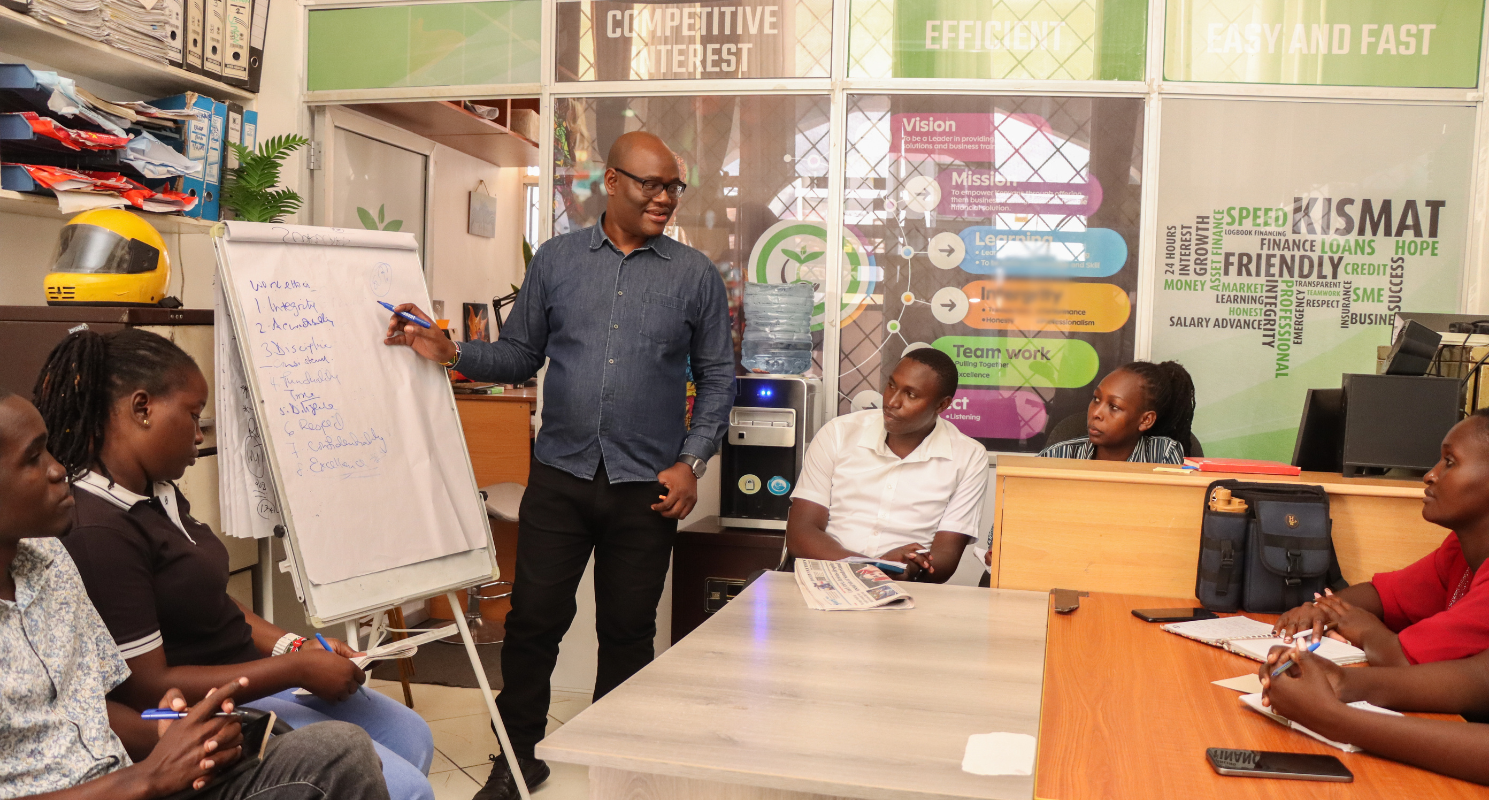
As Kismat has grown, so has its attention to the culture behind the business. Following Sinapis' training on Kingdom business practices, the Kismat team added integrity to its
existing core values of learning, respect, and teamwork.
For Nicholas, these values are not intended to sit on a wall. They are meant to shape interactions with both clients and employees.
That is an important part of the entrepreneurial journey: growth can change the size of a business, but values determine the kind of organization it becomes.
Kismat illustrates what can happen when entrepreneurial determination is matched with the right support at the right stage of growth.
Nicholas began with a problem he had witnessed during a period of extraordinary economic uncertainty. He bootstrapped the business, learned through difficult early experiences, built systems
around trust and accountability, and eventually recognized the need for external mentorship and stronger financial management.
The result has been significant business growth and an expanding ability to serve the communities around him.
For him, the value of joining Sinapis has extended beyond a single program. It has brought him ongoing mentorship and a network of support.
At Sinapis, we believe when entrepreneurs like Nicholas are equipped not only with capital, but with knowledge, accountability, mentorship, and a community that walks alongside them, growth can
become a pathway to greater service.


